Note
For detailed information about the Procedure for
BIS ISI Certification, visit:
Lorem ipsum dolor sit amet, consectetur adipiscing elit, sed do eiusmod tempor incididunt ut labore
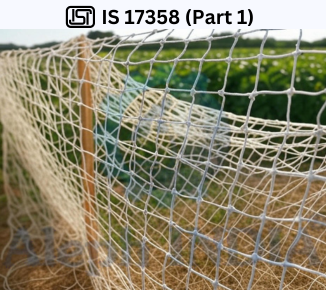
BIS certification is essential for Fencing Nets for Agriculture and Horticulture Purposes – Made From Extruded Polymer Mesh as per IS 17358 (Part 1):2020. This standard ensures that fencing nets used to protect crops, orchards, and plantations are reliable, durable, and capable of withstanding outdoor conditions. Certification under IS 17358 (Part 1):2020 affirms that these nets meet performance and safety requirements, making them suitable for agricultural and horticultural fencing applications.
This standard specifies the requirements for fencing nets manufactured using extruded polymer mesh, intended primarily for agricultural and horticultural purposes. These fencing nets are widely used to demarcate land, protect crops from animals and pests, and secure farming areas without obstructing airflow or sunlight. IS 17358 (Part 1):2020 outlines key parameters such as material composition (typically polyethylene or polypropylene), mesh design and structure, breaking strength, elongation, UV resistance, dimensional stability, and workmanship. The standard also includes guidelines on packaging, labelling, and visual inspection to ensure uniformity and product quality.
| Product Name | Fencing Nets For Agriculture And Horticulture Purposes – Made From Extruded Polymer Mesh |
| Applicable Indian Standard | IS 17357 : 2020 |
| Applicable Certification Scheme | IS 17358 (Part 1) : 2020 |
| Compliance Requirement | Mandatory |
| Quality Control Order | View QCO |
| Scope as per Standard | This standard (Part 1) prescribes the constructional and performance requirements for high-density polyethylene (HDPE) fencing nets used in agriculture, horticulture, gardens, forestry, animal husbandry, and poultry. These nets are primarily intended for protection against stray animals and to restrict unauthorized entry, ensuring security and safeguarding of the designated areas. |
BIS certification under IS 17358 (Part 1):2020 ensures product consistency, safety, and suitability for use in diverse climatic conditions. For manufacturers, certification boosts market credibility and opens doors for bulk procurement opportunities from government and private institutions. For end-users, including farmers and horticulturists, certified fencing nets offer a dependable solution for crop protection, with assured durability and performance.
A streamlined process designed to ensure compliance, quality, and efficiency at every step.
Preparation and submission of required documents.
Filing the application with BIS along with applicable fees.
Inspection and evaluation of manufacturing facility.
Testing of product samples in BIS recognized laboratory.
Successful evaluation and grant of BIS ISI Mark license.
Watch our detailed video to understand each step involved in obtaining BIS ISI Mark Certification.
For detailed information about the Procedure for
BIS ISI Certification, visit:
The estimated time frame for obtaining BIS certification under IS 17358 (Part 1):2020 is:
BIS certification under IS 17358 (Part 1):2020 is a key step toward ensuring the effectiveness and reliability of fencing solutions in Indian agriculture. By complying with this standard, manufacturers not only ensure product quality but also contribute to enhanced crop protection and farm security.
Partner with Aleph INDIA for end-to-end assistance in obtaining BIS certification for Fencing Nets as per IS 17358 (Part 1):2020, and ensure your products align with national quality and performance benchmarks.

Partner with Aleph INDIA to simplify your BIS certification journey and ensure full compliance with IS 17358 (Part 1):2020 for robust and high-performance packaging solutions.
BIS certification for fencing nets under IS 17358 (Part 1):2020 is currently voluntary. However, obtaining certification enhances market credibility and ensures compliance with recognized quality standards, especially when dealing with institutional buyers.
The standard allows fencing nets to be made from extruded polymer mesh, typically using polyethylene or polypropylene. The materials must meet specific requirements for strength, durability, and UV resistance as outlined in the standard.
Key tests include evaluation of mesh structure, tensile strength, elongation, UV resistance, dimensional accuracy, and visual inspection to assess workmanship and product finish.
Once granted, the BIS license is generally valid for a period of two years and is renewable thereafter, subject to continued compliance with the standard and BIS surveillance guidelines.

 Spain
Spain With a focus on IS 1786 (High Strength Deformed Steel Bar), the Bureau of Indian Standards conducted a successful BIS Audit for Celsa Group. The director of ...
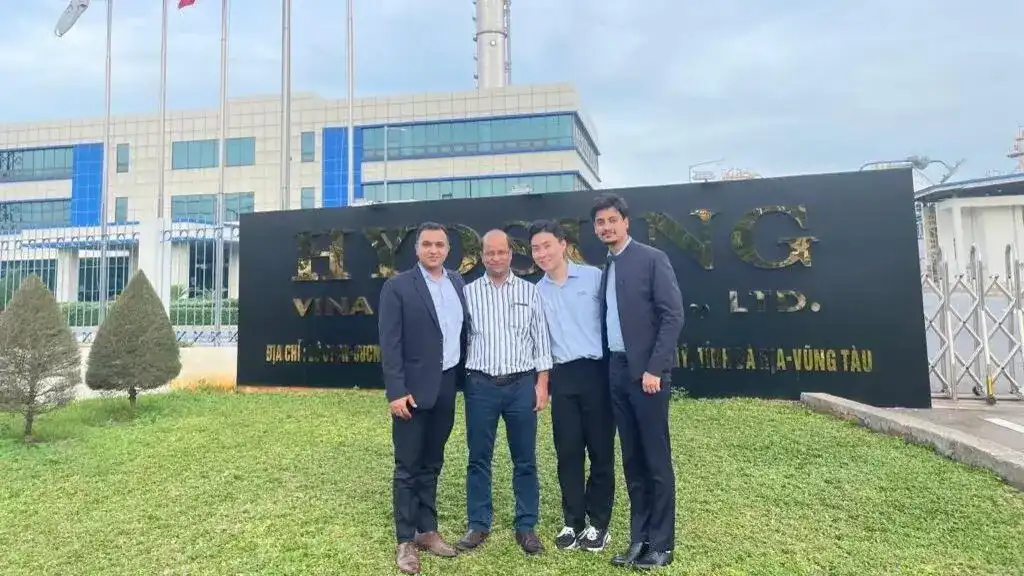
 Vietnam
 Recently, the Bureau of Indian Standards completed a BIS Audit for M/S Hyosung Vina Chemicals Co., LTD, a prestigious client in Vietnam. Aleph INDIA's Princi...

 Taiwan
 Another Successful Audit completed by the Bureau of Indian Standards! Proud moment as Aleph INDIA Group's client, M/S. GSLIDE CORPORATION.(Taiwan) , aces the...
Hear from industry leaders who have experienced the
impact of partnering with
Aleph.

 Aleph INDIA
Sr. Sales Manager
IVicon Security Tech Private Ltd
Aleph INDIA
Project Manager | Remidio
Innovation Solutions Pvt Ltd
Aleph INDIA
CEO | Makercubs
Technologies Pvt Ltd
Aleph INDIA
Technical Vice President |
AIR LIQUIDE MEDICAL SYSTEMS PRIVATE LIMITED