Note
For detailed information about the Procedure for
BIS ISI Certification, visit:
Lorem ipsum dolor sit amet, consectetur adipiscing elit, sed do eiusmod tempor incididunt ut labore
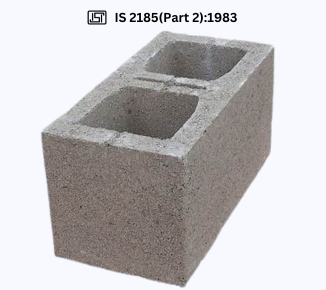
IS 2185 (Part 2):1983 lists the minimum requirements in the manufacture of lightweight concrete blocks, both hollow and solid, for structural and non-structural uses in buildings. In the standard, BIS has brought assurance that such blocks would conform to rigorous quality and performance standards. Certification by BIS under the standard is thus important in enabling manufacturers to confirm their products against high-expected standards of durability and structural strength. In addition, it adds value to the marketability of blocks while at the same time ensuring that construction builders and customers have the confidence that the blocks are going to be efficient for construction.
Lightweight concrete blocks, therefore, must be BIS certified since it has ensured that whatever products they are manufacturing have met the minimum threshold laid down by the Bureau of Indian Standards on quality and performance. This will help one ensure that the blocks are solid, durable, safe, and meet all the set regulatory requirements. What this means in construction projects is that only the materials matching the high standards of safety and quality concerns in the structural integrity and specifications of the project remain. This surely will guarantee builders and contractors reliable block performance, reducing the potential risk at the construction site.
Fast urbanization, combined with a greater awareness of environmental sustainability and energy efficiency, has created an unbelievable demand for lightweight concrete blocks within the Indian context. People increasingly prefer a tendency towards lightweight concrete blocks which ensure energy efficiency while causing minimum environmental degradation with the ever-growing demand for eco-friendly construction practices. Thus, continuity of performance and assured quality play an important role in meeting project deadlines besides ensuring safety. With such a market, this makes BIS-certified blocks very significant. It also gives more credibility to the blocks among builders and contractors, hence improving their standing in the competitive building industry.
The Indian Standard IS 2185 Part 2: 1983 deals with lightweight concrete hollow and solid blocks. This standard covers dimensions, compressive strength, density, and thermal insulation properties. Scope of IS 2185 Part 2:1983 The IS 2185 Part 2: 1983 also describes the manufacturer process and testing procedures besides quality control measures to be adopted to ensure that the blocks conform to such characteristics necessary for safe and efficient use in buildings.
| Product Name | Hollow and Solid Lightweight Concrete Blocks |
| Applicable Indian Standard | IS 2185 (Part 2):1983 |
| Applicable Certification Scheme | Product Certification Scheme (ISI Mark Scheme) Scheme 1 |
| Applicable Mark | BIS Standard Mark (ISI Logo) |
| Compliance Requirement | Mandatory |
| Quality Control Order | View QCO |
| Ministry | Ministry of Housing and Urban Affairs |
| Scope as per Standard | This standard ( Part II ) covers the following lightweight· concrete masonry building units which are used in the construction of load-bearing and non-load-bearing walls: Hollow ( open and closed cavity) load-bearing concrete blocks. Hollow (open and closed cavity) non-load-bearing concrete blocks. Solid load-bearing concrete blocks. Solid non-load bearing concrete blocks. |
BIS certification offers several significant benefits:
| Benefit | Description |
|---|---|
| Access to the Indian Market | BIS certification is a prerequisite for selling these blocks in India, ensuring compliance with local regulations. |
| Compliance with Indian Standards | Certified blocks meet the stringent quality and safety standards established by BIS. |
| Enhanced Product Credibility | BIS certification enhances the credibility of the product, making it more attractive to builders and contractors. |
| Increased Customer Trust | Customers are more likely to choose BIS-certified blocks, knowing they meet high standards for quality and safety. |
| Benefits for MSMEs | Small and medium-sized enterprises (MSMEs) can gain a competitive advantage by offering BIS-certified products, ensuring they meet market demands for quality. |
One of the projects is fairly large scale and had to be able to adopt sustainable and energy-efficient building materials to meet the environmental and budgetary targets. The selected project chose BIS-certified hollow and solid lightweight concrete blocks, which allow for great thermal insulation and hence reduce the usage of extra cooling mechanisms significantly. The use of such blocks contributed not only to faster construction but also to efficiency in energy usage by the homeowners, hence making the project successful in terms of sustainability and cost-effectiveness.
A streamlined process designed to ensure compliance, quality, and efficiency at every step.
Preparation and submission of required documents.
Filing the application with BIS along with applicable fees.
Inspection and evaluation of manufacturing facility.
Testing of product samples in BIS recognized laboratory.
Successful evaluation and grant of BIS ISI Mark license.
Watch our detailed video to understand each step involved in obtaining BIS ISI Mark Certification.
For detailed information about the Procedure for
BIS ISI Certification, visit:
The estimated time frame for obtaining BIS certification under IS 2185 (Part 2):1983 is:
Lightweight concrete hollow and solid blocks are one of the indispensable building materials in today's modern construction to provide good strength, insulation, and ease of laying. In this respect, all the blocks should be certified by BIS under IS 2185 [Part 2]: 1983 to meet the highest quality and performance standards and hence enable one to undertake the best construction venture. ALEPH INDIA is one of the major players in offering product certification services, offering services to help the manufacturer get this certification. Its professionalism ensures lightweight concrete blocks fully meet severe requirements according to IS 2185 (Part 2): 1983, thus giving more credibility and better marketability of the products. Lightweight concrete blocks by BIS- Aleph India-certified will remain one of the most integral building elements in the construction business with the growing demand for compliant and more eco-friendly building materials.
Aleph INDIA has been serving the industry as a single-window operator for all product regulatory compliance. We can assist importers or manufacturers in meeting all criteria for importing or selling a product in the Indian market.

Partner with Aleph INDIA to simplify your BIS certification journey and ensure full compliance with IS 2185 (Part 2):1983 for robust and high-performance packaging solutions.
IS 2185 (Part 2):1983 is a standard established by the Bureau of Indian Standards (BIS) that specifies the requirements for the manufacture of lightweight concrete blocks, including both hollow and solid types, used in various structural and non-structural building applications.
BIS Certification ensures that lightweight concrete blocks meet rigorous quality and performance standards, including strength, durability, and safety. It provides assurance that the blocks are reliable and comply with industry benchmarks, which is crucial for maintaining construction quality.
Lightweight concrete blocks offer several advantages, including reduced weight, improved thermal insulation, better soundproofing, and ease of handling. They also contribute to faster construction and energy efficiency in buildings.
Testing for lightweight concrete blocks involves evaluating parameters such as compressive strength, density, and durability. These tests ensure the blocks meet the specific requirements outlined in IS 2185 (Part 2):1983, verifying their quality and performance.
If lightweight concrete blocks fail to meet BIS standards, they should not be used in construction. Manufacturers need to address the deficiencies, re-test the blocks, and ensure they comply with the required specifications before obtaining or maintaining BIS Certification.

 Kuwait
 Equate Group (Kuwait) underwent a successful BIS Audit for Polyethylene Material in accordance with IS 7328: 2020 & Ethylene Glycol in accordance with IS 529...

 India
India FOSG Seminar where each member took actively part in the seminar and played a significant role in the successful completion of the seminar. The major motive ...

 France
 The Bureau of Indian Standards successfully completed a comprehensive BIS audit for M/S KEM ONE in France. The vinyl chloride monomer was the audit's specifi...
Hear from industry leaders who have experienced the
impact of partnering with
Aleph.

 Aleph INDIA
Sr. Sales Manager
IVicon Security Tech Private Ltd
Aleph INDIA
Project Manager | Remidio
Innovation Solutions Pvt Ltd
Aleph INDIA
CEO | Makercubs
Technologies Pvt Ltd
Aleph INDIA
Technical Vice President |
AIR LIQUIDE MEDICAL SYSTEMS PRIVATE LIMITED